
Future of Cars in 2030

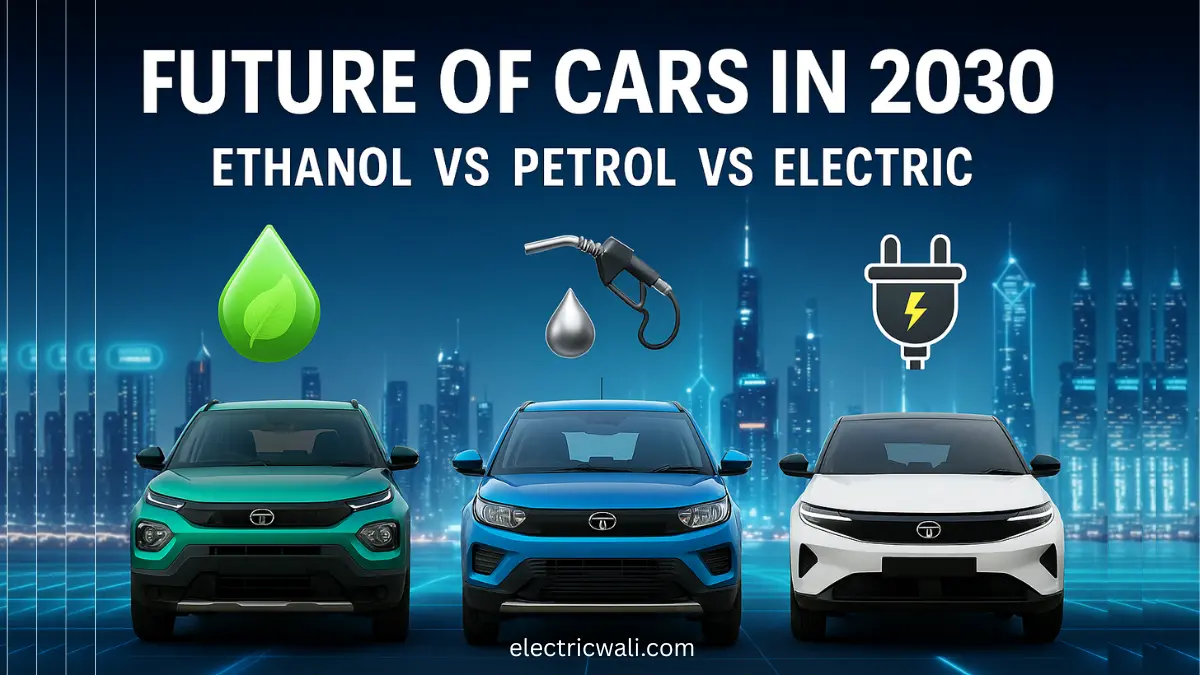
Future of Cars in 2030 | Ethanol vs Petrol vs Electric | All Details Analysis
Future of Cars in 2030 : This topic is super important for every car buyer and tech enthusiast today. India is moving rapidly in both the directions of electric mobility and clean fuels. Electric cars are in fast adoption, ethanol blending is cutting petrol emissions, and petrol vehicles are gradually moving into the background. The coming 5–6 years will be crucial for the energy transition, where a true comparison of ethanol, petrol, and electric will matter for both India’s environment and economy.
Quick Comparison
| Fuel Type | Key Traits |
|---|---|
| Petrol Car | Reliable but polluting and costly |
| Ethanol Car | Cleaner, farmer-friendly, flex-fuel ready |
| Electric Car | Zero emission but high upfront cost |
Main Features of Each Technology
✔️ Petrol cars have an existing infrastructure and affordability advantage.
✔️ Ethanol flex-fuel vehicles create demand for farmers.
✔️ Electric cars receive government incentives such as FAME-II and state subsidies.
✔️ EVs have low maintenance costs, and running costs fall by approximately ₹1 per km.
Government Vision 2025–2030
| Policy / Target | Detail |
|---|---|
| Ethanol Blending | 20% achieved, moving to 30% by 2030 |
| EV Penetration | 30% of total vehicle sales by 2030 |
| Net Zero Goal | 2070 target with clean transport |
Cost Comparison (Approx.)
| Type | Running Cost per km |
|---|---|
| Petrol Car | ₹6–7 |
| Ethanol (E20–E30) | ₹5–6 |
| Electric Car | ₹1–1.5 |
Unique Features: Future Tech and Policy Impact
India’s target by 2030 is clear—30% of vehicles electric and 30% ethanol blended in petrol. Efforts are underway to achieve both these targets simultaneously to reduce oil imports and boost the rural economy. Ethanol blending has already resulted in foreign exchange savings of ₹1.4 lakh crore.
✔️ Ethanol is a 100% made-in-India renewable source.
✔️ EV batteries can be charged from renewable power grids (solar/wind).
✔️ Petrol is on the radar of a gradual phase-out policy after 2040.
Current Updates: Future of Cars in 2030
Electric vehicle market has reached 2.08 million sales by 2024, and is matching the global pace by 40%. Under the ethanol blending policy, the 20% target was achieved by 2025, and the E30 transition is now underway.
✔️ India reached 20% ethanol blending in 2025.
✔️ Ethanol-blended petrol E30 will become standard by 2030.
✔️ Electric vehicle sales are seeing 30% growth every year.
FAQs
Q1. Will petrol cars become common in 2030?
Ans: Replacement will be slow, but petrol cars will gradually decline as both electric and ethanol expand.
Q2. Are ethanol cars safe?
Answer: Yes, flex-fuel engines are optimized for ethanol, but older engines have corrosion risks.
Q3. What will the resale value of electric cars be?
Ans: Will depend on battery performance and warranty; new battery recycling laws will help.
Q4. What benefits does ethanol provide to farmers?
Ans: Ethanol is produced from sugar cane and maize, which provides a stable income for farmers.
Q5. What will be India’s main car fuel by 2030?
Ans: Hybrid scenario—both electric and ethanol will form the basis of green transport.